

Preparing complete and accurate export customs documentation is a critical step in ensuring goods are cleared on schedule. However, many businesses and manufacturing facilities still face difficulties when preparing documents, declaring customs information, and handling related regulations. In this article, Vina Open will guide you through the entire export customs procedure, required documentation, and common mistakes to avoid in order to minimize risks when bringing goods to international markets.
Overview of Export Customs Procedures
In export activities, customs procedures are mandatory steps that allow goods to be legally cleared and transported to international markets. These procedures include document preparation, customs declaration processes, and compliance with related regulations.
What Are Export Customs Procedures? Why Are Customs Declarations Necessary?
Export customs procedures are the process by which businesses declare goods information to customs authorities before the goods are allowed to leave the country. This process includes preparing documents, electronic declarations, document inspections, and fulfilling legal obligations in accordance with regulations.
When businesses submit customs declarations, authorities can monitor product categories, origins, export taxes, quarantine requirements, product quality, and other related matters. Once all export customs procedures and tax obligations are completed, the goods will be approved and cleared by customs authorities.
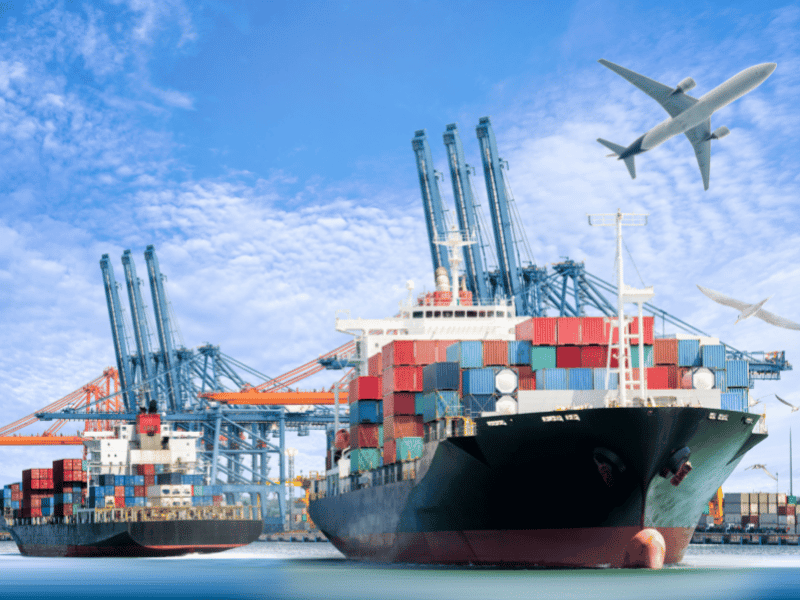
Export customs procedures involve declaring goods information to customs authorities.
Implementing export customs procedures helps businesses:
- Quickly clear goods through customs
- Reduce the risk of cargo detention or penalties
- Ensure compliance with legal requirements in Vietnam and importing countries
- Demonstrate professionalism and credibility to international partners
- Support payment processing, tax refunds, and proof of product origin
Entities Required to Declare Export Customs Procedures
Under current regulations, any organization or individual engaged in exporting goods abroad must carry out export customs declarations. Depending on the business model and type of goods, the responsible party may be the exporting business itself or an authorized representative.
Entities required to carry out export customs procedures include:
- Manufacturers and exporters of goods
- Import-export trading companies
- Agricultural cooperatives and production facilities
- Processing companies manufacturing goods for foreign partners
- Export consignment service providers
- Individuals or organizations engaged in cross-border business activities involving exports
- Forwarders and logistics companies authorized to carry out export procedures on behalf of businesses
Common Forms of Export Today
Export activities are conducted in various forms depending on the business model, partners, and commercial objectives, including:
- Direct export: Businesses directly sign contracts and sell goods to foreign buyers.
- Entrusted export: Businesses hire an intermediary company to carry out export activities under its name.
- Processing export: Businesses receive raw materials from foreign partners, manufacture or process products, and export the finished goods under contract.
- On-the-spot export: Goods are sold to foreign partners but delivered to another party within Vietnam as designated, without crossing the border.
- Temporary export for re-import: Goods are exported temporarily for exhibitions, repairs, construction projects, etc., and later re-imported into Vietnam.
- Export through international e-commerce platforms: Goods are exported through cross-border B2B platforms such as Amazon, Alibaba, and international Shopee.
There are many export methods suitable for different business models and operational requirements.
General Process of Export Customs Procedures
Although each product type and export method may have specific requirements, export customs procedures generally include the following steps:
Step 1: Prepare export documentation
Step 2: Submit electronic customs declarations and receive automatic channel classification
Step 3: Submit documents and undergo customs inspection based on channel classification and product characteristics
Step 4: Customs clearance of goods
Step 5: Finalize customs procedures and complete transportation
Customs Clearance Channels and Common Errors
During export customs procedures, businesses need to prepare complete documentation and understand the customs channeling system and clearance process to estimate shipping timelines, costs, and delivery schedules.
Customs Clearance Channeling Process
The customs system receives declaration information and classifies declarations into different inspection channels based on risk levels. The process includes:
Step 1: Customs declaration submission
Businesses declare goods information through the VNACCS/VCIS system, which is then received by customs authorities.
Step 2: Declaration channel classification
Export goods are classified into three main channels:
- Green channel: No inspection required
- Yellow channel: Document inspection and supplementary documentation required
- Red channel: Both document and physical cargo inspections required
Step 3: Fulfill related obligations
Businesses must comply with customs requirements, complete export tax and fee payments, quarantine procedures, and specialized inspections if applicable.
Step 4: Customs clearance confirmation
Once the documentation is valid and all requirements are met, customs authorities approve the clearance and the goods are allowed to be exported.
The customs system receives information and classifies goods into inspection channels.
Common Errors in Export Customs Procedures
In practice, many businesses encounter difficulties during customs declarations due to various reasons, with the most common errors including:
- Incorrect HS code declaration
- Inconsistent information across documents
- Missing quarantine certificates or specialized licenses
- Incorrect declaration of goods value
- Late declaration or failure to meet deadlines
Even small mistakes in documentation may result in goods being detained for inspection or customs declarations needing amendments. This is especially common among newly established businesses and production facilities that are not yet familiar with detailed customs procedures.
What Is On-the-Spot Export? Which Businesses Should Apply It?
In reality, many manufacturing businesses and production facilities, despite having quality products, still face challenges when entering export markets. In this context, on-the-spot export has become a suitable solution that allows businesses to gradually participate in international supply chains without directly shipping goods overseas.
What Is On-the-Spot Export?
On-the-spot export refers to transactions where goods are sold between Vietnamese businesses and foreign traders, but the delivery takes place within Vietnam according to the foreign buyer’s instructions. In other words, the goods are sold to a foreign partner without physically leaving Vietnamese territory. The receiving party is another business in Vietnam designated by the foreign partner.
On-the-spot export is still considered an export activity and must comply with customs procedures according to regulations.
On-the-spot export involves selling and delivering goods within Vietnam under foreign partner instructions without crossing national borders.
Common Cases for Applying On-the-Spot Export
On-the-spot export is widely used in manufacturing and international trade models, especially in industrial zones and FDI enterprises. Common examples include:
- Businesses processing goods for foreign traders
- Export processing enterprises purchasing domestic raw materials
- Supply chains of multinational corporations
- Businesses selling products to foreign traders who designate delivery within Vietnam, commonly in industries such as agricultural products, food, packaging, and components
- New businesses looking to join international export supply chains
Documents Required for On-the-Spot Export Declarations
Although goods are delivered within Vietnam, businesses are still required to submit customs declarations and prepare all necessary export documentation.
What Does an On-the-Spot Export Customs File Include?
Depending on the business, transaction type, and industry, documentation requirements may vary, but the basic documents generally include:
- Sales contract or processing contract with foreign traders
- Commercial Invoice
- Packing List
- On-the-spot export customs declaration
- Written delivery designation in Vietnam from the foreign trader
- Domestic transportation documents (if applicable)
- Technical documentation or specialized management documents for specific products
Additionally, the on-the-spot importing business must also submit corresponding import declarations to complete the two-way customs process. These documents must contain consistent information regarding product names, quantities, units, delivery terms, and receiving parties.
How to Open, Declare, and Submit On-the-Spot Export Customs Declarations
Under current regulations, businesses carry out on-the-spot export declarations through the VNACCS/VCIS electronic customs system, similar to other export types. The process generally includes:
Step 1: Prepare declaration information, including export type code, exporter information, receiving company details, foreign partner information, HS code, cargo value, and quantity.
Step 2: Open an electronic customs declaration using customs software and submit the declaration to the VNACCS system.
Step 3: Submit documentation and process according to customs channel classification.
Step 4: Obtain customs clearance and complete delivery to the designated receiving party in Vietnam.
On-the-spot export requires declarations, documentation, and procedures similar to traditional exports.
Form 22 Used in On-the-Spot Export
In on-the-spot export activities, Form No. 22 is commonly used to confirm the delivery and receipt of goods between related parties in accordance with customs regulations. This form confirms that goods have been physically delivered and serves as a basis for reconciliation between the exporter and on-the-spot importer, as well as for audits, settlements, and customs recordkeeping.
Businesses must accurately declare and properly retain documents for future inspections or settlements. Form 22 can be downloaded from the link provided below.
Delivery Confirmation Process and Procedure Completion
After goods are delivered to the receiving party in Vietnam, businesses must complete delivery confirmation procedures to finalize the on-the-spot export process.
The process includes:
Step 1: Carry out goods delivery, inventory counting, document reconciliation, and confirmation of quantity and condition of goods.
Step 2: Sign the delivery confirmation record according to the customs declaration details.
Step 3: Complete documentation storage related to export customs procedures.
Step 4: Reconcile and fulfill all related obligations.
The delivering and receiving parties confirm delivery and complete procedures.
Finalizing On-the-Spot Export Declarations and Important Notes
After completing delivery and customs clearance, businesses must still finalize on-the-spot export declarations to complete the entire customs process.
Process for Finalizing On-the-Spot Export Declarations
This process is carried out after goods have been delivered and both parties have completed their declaration obligations. The process includes:
Step 1: Reconcile information between the exporter and on-the-spot importer
Step 2: Prepare finalization documents
Step 3: Submit documents and complete finalization confirmation
Step 4: Store records after finalization
Common Errors During Declaration Finalization
The declaration finalization process may take longer than expected or require multiple amendments due to inconsistent data, missing documentation, or common issues such as:
- Mismatched information between export and import declarations
- Missing delivery records or proof of delivery
- Incorrect declaration of on-the-spot import-export type
- Delayed completion of finalization documentation
- Failure to properly store post-clearance documentation
After goods have been delivered, customs declaration finalization must be completed.
FAQ – Export Customs Procedures
How long do export customs procedures take?
Processing time depends on factors such as product type, completeness of documents, customs channel classification, and inspection requirements. It may take only a few hours for green channel declarations or 1–3 days for red channel shipments.
Can new businesses declare customs procedures themselves?
Yes. New businesses can carry out customs declarations independently if they already have:
- An import-export tax code
- A registered digital signature
- Electronic customs declaration software
- Knowledge of customs procedures and related regulations
Is a customs declaration required for on-the-spot export?
Yes. Even though the goods are not physically exported abroad, on-the-spot export is still considered an export activity under regulations, so customs declarations are mandatory.
When is Form 22 required?
Form 22 is commonly used in on-the-spot import-export activities to confirm delivery and receipt of goods between related parties. It is typically required when:
- Goods have been physically delivered within Vietnam
- Delivery completion must be confirmed according to customs regulations
- Supporting documentation is needed for declaration finalization or post-clearance audits
Is declaration finalization required for on-the-spot export?
Yes. After completing delivery and customs clearance, businesses are still required to finalize on-the-spot export declarations according to regulations.
How should businesses handle red-channel customs declarations?
In this case, businesses must prepare a complete set of related documents, cooperate with customs officers during cargo inspections, and ensure that the actual goods match the declared information.
Export customs procedures are among the most important factors determining whether export activities proceed smoothly, on schedule, and in compliance with regulations. Especially for new businesses, the information compiled by Vina Open above will help gradually build and complete export processes, enabling products to access international markets successfully.