

Seafood export is one of Vietnam’s key industries, generating significant export revenue for the country. However, it is also subject to strict requirements regarding quarantine, food safety, traceability, and regulatory compliance. So, what do businesses need to prepare in order to bring Vietnamese seafood products to major global markets? Let VinaOpen explore the article below to help standardize export documentation and connect with international Buyers.
Vietnam’s Seafood Export Potential
With a coastline stretching over 3,260 kilometers, along with an extensive network of rivers, lakes, and aquaculture farming areas, Vietnam is considered one of the countries with strong potential for seafood industry development in Asia. Over the years, seafood has consistently remained one of Vietnam’s leading export sectors, making a major contribution to agricultural export turnover while creating employment opportunities for millions of workers.
In addition to its strong raw material advantages, Vietnam also has a well-developed seafood processing industry with large-scale manufacturing capacity that meets international standards. Currently, Vietnamese seafood is exported to hundreds of countries and territories worldwide, including the United States, the EU, Japan, South Korea, China, Canada, and Australia. High-value seafood export products include shrimp, pangasius, tuna, basa fish, octopus, and processed seafood products.
Overview of Requirements for the Seafood Export Industry
Seafood exports are considered a high-value sector, but in return, products must meet strict international market requirements.
HS Codes for Seafood Products
The HS code for seafood products depends on the specific product type, seafood origin, processing method, and storage condition. Determining the correct HS code helps businesses complete customs declarations, identify export taxes, and verify related compliance requirements.
Some common HS codes for seafood products include:
0303: Frozen fish, excluding fish fillets and other fish meat under heading 03.04
0304: Fish fillets and other fish meat, fresh, chilled, or frozen
0306: Crustaceans, whether in shell or not, live, fresh, chilled, or frozen
0307: Molluscs, whether in shell or not, live, fresh, chilled, or frozen
0308: Aquatic invertebrates other than crustaceans and molluscs, live, fresh, chilled, or frozen
Most seafood export products are subject to 0% VAT if they meet current tax regulations. In addition, many seafood items currently benefit from a 0% export tax rate to enhance international competitiveness.
However, businesses exporting seafood should also consider other financial obligations and costs, including customs fees, quarantine fees, cold-chain logistics costs, and certification expenses.
Seafood Export Process
Seafood products belong to a category with extremely strict requirements related to food safety, storage conditions, inspections, and traceability. Therefore, the seafood export process is often much more complex than conventional export sectors and requires close control at every stage.
Below is the export procedure businesses should understand:
Step 1: Check Export Conditions and Import Market Requirements
Businesses need to identify the standards required by the target market, determine the regulatory category of the exported product, and review quarantine requirements as well as necessary certifications. This helps minimize the risk of shipment rejection or customs delays.
Step 2: Prepare Goods and Control Quality
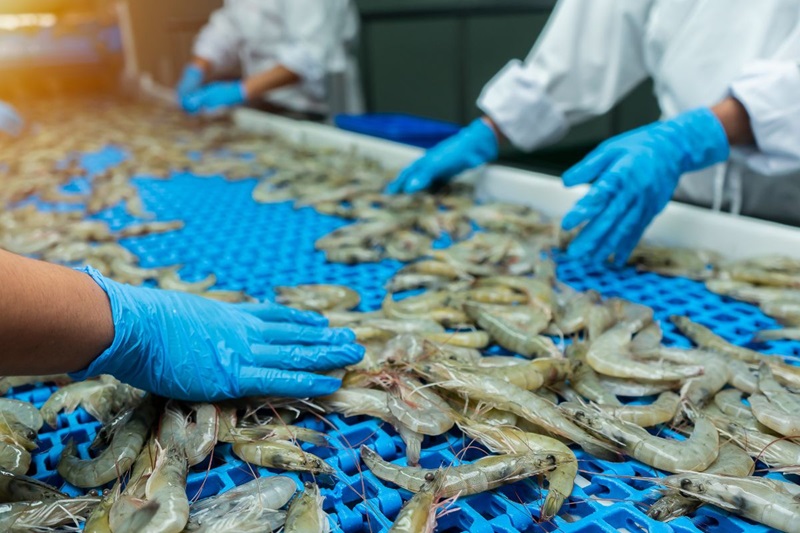
Based on market requirements, exporters source raw materials, conduct preliminary processing, package goods, and freeze products according to export standards. This stage requires strict control over temperature, hygiene conditions, freezing procedures, packaging, and labeling.
Step 3: Prepare Seafood Export Documentation
Seafood export documents must include all necessary customs paperwork as well as quality certificates, inspections, and compliance documents required by each market.
Step 4: Register for Quarantine and Specialized Inspection
Seafood belongs to a specialized regulatory category, so exporters must apply for quarantine certificates, health certificates, and food safety inspections. Once approved, official certificates will be issued to complete the export documentation.
Step 5: Submit Export Customs Declaration
Businesses proceed with customs declaration procedures, HS code declarations, and supporting export documentation to receive customs clearance approval before shipping goods overseas.
Step 6: International Transportation and Payment Completion
Goods are loaded onto shipping vessels, and exporters then send the document package to the Buyer or the bank to complete international payment according to the contract.
U.S. Market Requirements for Seafood Exports
The United States is one of Vietnam’s largest seafood import markets, with strong demand for products such as shrimp, pangasius, squid, and processed seafood. However, it is also a market with a highly strict food safety management and import control system.
Businesses exporting seafood to the U.S. must meet the following requirements:
FDA Registration: Export products must be registered with the FDA, manufacturing facilities must be declared, and businesses must maintain a suitable food safety management system.
HACCP Compliance: U.S. Buyers often assess manufacturing processes, factory hygiene conditions, quality control documentation, traceability systems, and raw material handling procedures.
Strict Residue and Chemical Control: Export products must not exceed allowable limits for antibiotic residues, heavy metals, microorganisms, or prohibited chemicals.
FSMA Compliance: Exporters must have clear food safety control systems, complete records, raw material traceability, and proper storage and transportation management.
Traceability and IUU Prevention: Seafood businesses must demonstrate legal product origins, supply chain transparency, farming area records, and aquaculture logs.
Packaging and Labeling Requirements: Seafood exports must comply with labeling regulations, including product name, ingredients, manufacturer information, country of origin, storage conditions, manufacturing date, and expiration date.