


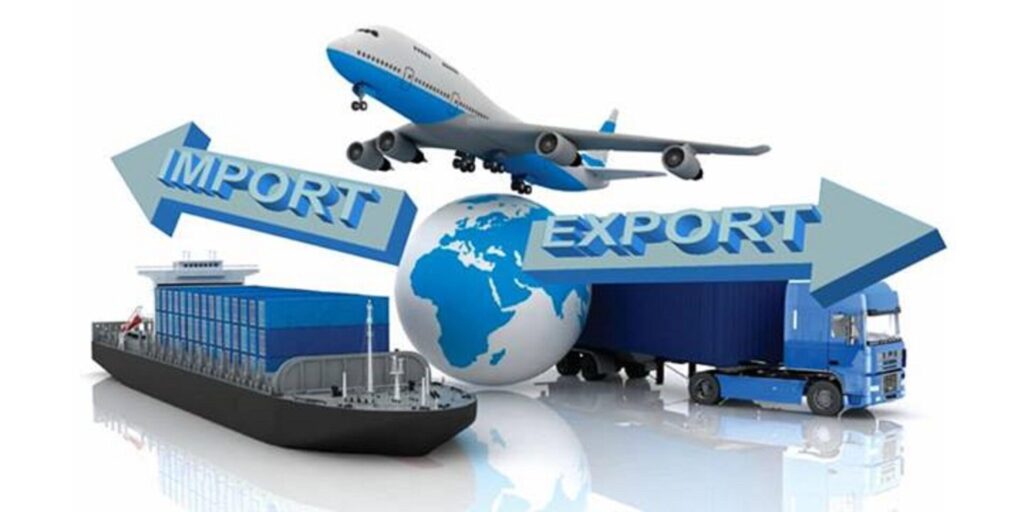
When businesses begin exporting goods to international markets, many often struggle to determine the actual total cost of an export shipment. Understanding what export costs include not only helps companies proactively calculate selling prices and profits, but also minimizes risks and optimizes operational efficiency. In this article, Vina Open will provide a comprehensive overview of the most common costs involved in exporting goods.
Important Categories of Export Costs
In export activities, the total cost of an order does not only include production costs, but also many additional expenses related to logistics, customs procedures, documentation, international payments, and risk management.
- Production costs: The fundamental costs that make up the product value before export.
- Logistics costs: Often account for a large proportion of total export expenses, especially for certain products.
- Tax and customs costs: When exporting goods, businesses must consider expenses related to customs procedures and tax policies.
- Documentation costs: International exports require businesses to prepare various types of documents.
- International payment costs: In global transactions, businesses often incur bank charges and foreign trade payment fees.
- Insurance and risk management costs: In international exports, goods go through long transportation processes and multiple transit stages, so risks always exist.
Taxes Related to Exported Goods
In export operations, besides logistics and operational costs, businesses also need to understand the taxes and fees involved.
Common Taxes and Fees in Exporting
Depending on the type of goods and export market, businesses may incur the following taxes and fees:
- Export tax: A tax applied to certain goods when they are exported abroad.
- Value Added Tax (VAT): Exported goods are generally subject to a 0% VAT rate if the business fully meets legal requirements.
- Customs and service fees
- Specialized inspection fees
- Export document issuance fees
Export Goods Eligible for Tax Exemptions or Incentives
Vietnam currently participates in many Free Trade Agreements (FTAs), creating favorable conditions for exporters to enjoy tax incentives in international markets.
- Goods subject to 0% export tax: Most exported goods today are eligible for 0% export tax and 0% VAT if they comply with regulations.
- Import tax incentives through Certificates of Origin (C/O): With the appropriate C/O, Vietnamese goods may benefit from reduced import tax, import tax exemptions, and trade incentives in importing countries.
How to Calculate Export Value, Exchange Rate, and Export Tax
In export activities, correctly determining the customs value, tax exchange rate, and payable tax is essential for businesses to:
- Accurately calculate export costs
- Properly declare customs information
- Minimize errors during tax finalization
- Proactively build international pricing strategies
Especially for new exporters, confusion between invoice value, taxable value, and exchange rate conversion is quite common. Therefore, businesses need to clearly understand the calculation principles to avoid risks during customs declarations.
How to Calculate Export Taxable Value
The export taxable value is the value of goods used as the basis for calculating export tax according to customs regulations.
Normally, the taxable value is determined based on:
- The selling price of goods at the export port
- Excluding international insurance and freight charges
In many cases, the taxable value is determined according to the FOB price.
General formula:
Export Taxable Value=Quantity of Goods×FOB Unit Price\text{Export Taxable Value} = \text{Quantity of Goods} \times \text{FOB Unit Price}Export Taxable Value=Quantity of Goods×FOB Unit Price
Where:
- FOB refers to the delivery price at the export port
- The price excludes international freight and insurance costs
How to Calculate Export Tax
After determining the taxable value, businesses calculate the export tax payable according to the tax rate applicable to each product category.
Export tax formula:
Export Tax Payable=Taxable Value×Export Tax Rate\text{Export Tax Payable} = \text{Taxable Value} \times \text{Export Tax Rate}Export Tax Payable=Taxable Value×Export Tax Rate
How the Tax Exchange Rate Is Determined
In exports, goods are usually traded in foreign currencies. However, for customs declarations and tax calculations, authorities convert the goods’ value into VND using the official tax exchange rate.
The tax exchange rate is usually announced by customs authorities and updated periodically according to current regulations. Businesses cannot arbitrarily use commercial or bank exchange rates for tax declarations if they do not comply with regulations.
Conversion formula:
Taxable Value in VND=Foreign Currency Value×Tax Exchange Rate\text{Taxable Value in VND} = \text{Foreign Currency Value} \times \text{Tax Exchange Rate}Taxable Value in VND=Foreign Currency Value×Tax Exchange Rate
VAT 0%, VAT Refunds, and Documentation Requirements
In export activities, the 0% VAT policy and VAT refunds are important advantages that help businesses reduce output costs, increase international competitiveness, and optimize cash flow.
Are Exported Goods Eligible for 0% VAT?
Under current regulations, most exported goods are subject to:
- 0% VAT rate
This policy is designed to encourage businesses to expand exports to international markets.
Conditions for VAT Refunds on Exported Goods
To qualify for VAT refunds on exported goods, businesses must prepare a complete set of documents and meet all legal requirements.
Key conditions typically include:
- A valid export contract
- Customs declarations cleared by customs authorities
- Proof of payment through banks
- Complete invoices and accounting documents
What Documents Are Required for Export VAT Refunds?
When applying for export VAT refunds, businesses usually need to prepare:
- Legal and tax declaration documents
- Export documentation
- Payment documentation
- Accounting records
FOB, CIF, Incoterms, and Their Impact on Costs and Quotations
In export operations, one of the factors that directly affects selling prices, delivery responsibilities, and total costs is international commercial terms, also known as Incoterms. Choosing the right delivery terms not only helps businesses accurately calculate export prices but also better control logistics costs, insurance, and transportation risks.
Definition of FOB and CIF
FOB and CIF are two of the most common international shipping terms in sea freight exports under Incoterms.
Under FOB, the seller is responsible for:
- Preparing the goods
- Handling export customs procedures
- Delivering the goods onboard at the export port
Once the goods pass the ship’s rail, risks and costs transfer to the buyer.
Under CIF (Cost, Insurance, and Freight), the seller must additionally:
- Pay international freight charges
- Purchase cargo insurance for the shipment
The seller bears the costs up to the destination port specified in the contract.
How Incoterms Affect Export Pricing
Incoterms directly impact:
- International selling prices
- Export cost structures
- Delivery responsibilities
- Risk allocation between seller and buyer
Each Incoterms condition determines:
- Who bears logistics costs
- Who pays for insurance
- Who handles customs procedures
- The point at which risk transfers
International Payments, Insurance, and Financial Risk Management
In export activities, besides production and logistics costs, businesses also face risks related to:
- International payments
- Exchange rate fluctuations
- Cargo loss or damage during transportation
- Late payment from buyers
Especially for new exporters, a lack of understanding of international payment methods or poor risk management may lead to:
- Cash flow problems
- Debt disputes
- Major financial losses
- Long-term business disruptions
Therefore, businesses should proactively establish payment control procedures, choose suitable insurance solutions, and prepare strategies to minimize risks in international transactions.
Common International Payment Methods
Below are some widely used international payment methods today:
- T/T (Telegraphic Transfer): International bank transfer payment method.
- L/C (Letter of Credit): A bank-issued commitment guaranteeing payment to the seller if all required documents are properly submitted.
- D/P and D/A: International collection methods handled through banks.
Why Cargo Insurance Matters in Exporting
Cargo insurance helps businesses:
- Minimize financial losses
- Protect shipment value
- Increase transaction security
Common insurance types include:
- Marine cargo insurance
- Air cargo insurance
- Cold chain insurance
- All Risks insurance
How to Reduce Financial Risks in Exporting
To maintain sustainable export operations, businesses should proactively establish financial risk management strategies from the beginning.
Important solutions include:
- Verifying partner credibility before transactions
- Choosing appropriate payment methods
- Strictly controlling export documentation
- Managing exchange rate risks proactively
- Purchasing insurance suitable for the type of goods
Export Pricing Tools and Checklists
In export activities, calculating international selling prices is not simply a matter of adding production costs and desired profit margins. Therefore, building a checklist and using export pricing tools is extremely important for businesses.
Export Cost Items to Include
Before quoting FOB, CIF, or other Incoterms prices, businesses need to compile all cost categories related to the export order.
Basic checklist:
| Cost Category | Details |
|---|---|
| Production Costs | Raw materials, labor, packaging, quality control |
| Packaging Costs | Cartons, pallets, labels, moisture absorbers |
| Domestic Logistics | Trucking, handling, transport to port |
| Customs Costs | Customs declarations, inspections, customs services |
| Documentation Costs | Invoice, B/L, C/O, Health Certificate, COA |
| International Freight | Ocean or air freight |
| Cargo Insurance | Insurance according to delivery terms |
| Banking Fees | Swift, L/C, international transfer fees |
| Contingency Costs | Shrinkage, exchange rates, logistics surcharges |
Sample FOB and CIF Pricing Formulas
FOB and CIF are the two most common export quotation methods.
FOB Pricing Formula
FOB prices generally include:
- Production costs
- Packaging
- Domestic logistics
- Customs costs
- Loading charges
Reference formula:
FOB Price=Production Cost+Domestic Cost+Export Cost+Profit\text{FOB Price} = \text{Production Cost} + \text{Domestic Cost} + \text{Export Cost} + \text{Profit}FOB Price=Production Cost+Domestic Cost+Export Cost+Profit
CIF Pricing Formula
CIF prices additionally include:
- International freight charges
- Cargo insurance
Formula:
CIF Price=FOB Price+Freight+Insurance\text{CIF Price} = \text{FOB Price} + \text{Freight} + \text{Insurance}CIF Price=FOB Price+Freight+Insurance
Tools That Help Calculate Export Costs
To optimize quotation processes and cost control, businesses can use tools such as:
- Export pricing Excel templates
- ERP or import-export management software
- Logistics quotation tools from freight forwarders
- HS code and tax lookup tools
Export costs include not only production expenses but also logistics, customs, documentation, taxes, insurance, and international payment-related costs. Understanding each cost category, knowing how to calculate FOB/CIF prices, and proactively managing risks will help businesses build accurate quotations, optimize profits, and improve competitiveness in international markets. Especially for new exporters, standardizing pricing checklists and processes from the beginning will create a more sustainable and efficient operational foundation in the long term.