


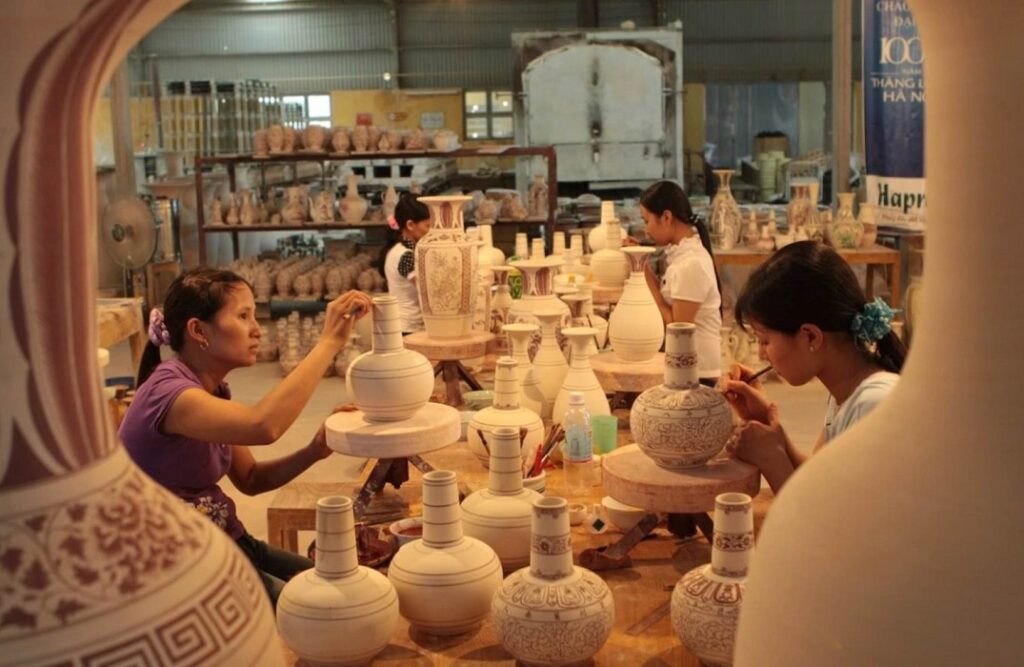
Vietnam’s handicraft export sector continues to show strong growth potential thanks to its skilled craftsmanship, rich cultural identity, and evolving global consumer trends. However, to successfully access international Buyers, businesses must meet a wide range of export standards, compliance requirements, and market expectations.
Let’s explore with VinaOpen the export opportunities for this sector, along with the key standards and requirements businesses need to prepare for successful international trade.
Export Potential of Handicrafts, Wood Products, Textiles, and Industrial Goods
In recent years, handicrafts, wooden products, textiles, and supporting industrial goods have become highly promising export sectors for Vietnam. Combined with rapidly changing global consumption trends, this creates significant opportunities for Vietnamese enterprises to expand export activities in these industries.
Characteristics of Vietnam’s Handicraft Industry
Handicraft products include items made entirely by hand or through a combination of handcrafted techniques and modern manufacturing processes. These products often carry strong aesthetic value, creativity, and distinctive cultural significance.
Common handicraft export products in Vietnam include:
- Bamboo and rattan weaving products
- Ceramics and pottery
- Lacquerware
- Wooden handicrafts
- Embroidery and lace products
- Handwoven textiles
- Handmade decorative products
Unlike mass-produced goods, handicrafts typically offer:
- High customization capabilities
- Strong handcrafted value
- Unique designs
- Flexible production based on Buyer requirements
This makes handicrafts highly suitable for:
- OEM manufacturing
- Private label production
- Custom production based on Buyer-specific designs
Vietnam’s handicraft industry is also recognized for its quality, cultural value, and environmentally friendly characteristics. As global consumers increasingly prioritize sustainable and eco-friendly products, this creates a major competitive advantage for Vietnamese exporters.
Why Does the Handicraft Industry Have Strong Export Potential?
Vietnam’s handicraft exports offer significant value to national export turnover due to several important factors:
- Global consumer trends increasingly favor handmade and sustainable products
- Vietnam has strong advantages in raw materials and skilled labor from long-established craft villages
- Rising OEM and private label demand creates new opportunities for manufacturing businesses
- Growth of international B2B commerce and digital marketplaces helps Suppliers reach Buyers more effectively and expand into global export markets
Although opportunities are strong, compliance requirements for handicraft exports are becoming increasingly strict. Businesses must meet higher standards related to:
- Raw material origin verification
- Traceability systems
- Product quality consistency
- Export packaging standards
- Supplier documentation and certification
To scale successfully, businesses should invest in structured Supplier profiles, product certifications, and export readiness.
Export Requirements for Wood and Wooden Products
The wood and furniture industry is one of Vietnam’s leading export sectors with strong demand from many international markets. However, these products are also subject to strict regulations regarding quality, raw materials, sustainability, and compliance.
Regulations and Laws for Exporting Wood Products
Businesses exporting wood and wooden products should understand key international requirements and build proper compliance systems to reduce export risks.
Legal Wood Origin Requirements
To combat illegal logging, protect forests, and improve global supply chain transparency, businesses should prepare:
- Raw material origin records
- Purchase documents
- Traceability systems
- Legal timber certification documents
Lacey Act Compliance
This regulation helps control imports of products derived from illegally harvested wood. Exporters may need to declare:
- Wood species
- Country of harvest
- Quantity or volume
- Wood source information
EUDR Compliance
Businesses must demonstrate that wood products:
- Are not linked to deforestation
- Come from legal sources
- Have traceable supply chains
FSC Certification for Wood Exports
FSC certification supports:
- Sustainable sourcing
- Responsible forest management
- Transparent harvesting practices
Fumigation and Wood Quarantine Requirements
Wood packaging materials, wooden pallets, and some raw wood products may require fumigation or heat treatment according to ISPM 15 standards depending on import market regulations.
Common Compliance Errors in Wood Exports
Businesses exporting wooden handicrafts often face common compliance issues such as:
- Inability to prove legal wood origin
- Incorrect or incomplete wood species information
- Failure to meet certification requirements
- Weak control over wooden packaging and pallets
- Inconsistent export documentation, quantities, or product descriptions
Export Requirements for Handicrafts and Home Décor Products
Global consumption trends continue to create strong export opportunities for Vietnamese handicraft and home décor manufacturers.
Material, Labeling, and Packaging Standards
Unlike many conventional manufactured goods, handicraft and home décor exports require more than attractive designs.
Material Requirements
- Proof of legal raw material sourcing
- No restricted materials
- No excessive chemical content beyond allowed limits
Product Labeling Standards
Labels may need to clearly include:
- Product name
- Material type
- Country of origin
- Product code
- Dimensions
- Usage instructions
- Care instructions
- Other market-specific information
Export Packaging Requirements
Products should meet packaging standards related to:
- Impact protection
- Moisture prevention
- Shape preservation
- Packaging specifications required by the target market
Common Buyer Complaints
Businesses may face complaints due to:
- Inconsistent product quality
- Damage during transportation
- Incorrect labels or packaging
- Failure to meet compliance standards of import markets
Documents and Standards for Textile, Components, and Industrial Export Products
Textiles, components, and industrial products are major B2B export sectors in Vietnam.
Required Certifications and Documentation
To qualify for export, businesses often need to prepare the following:
Basic Export Documents
- Commercial Invoice
- Packing List
- Sales Contract
- Bill of Lading
- Shipping Booking Confirmation
- Export Customs Declaration
- Related trade documentation
These support customs clearance, trade verification, and international payment processes.
Quality Certifications and International Standards
- ISO
- RoHS
- CE Marking
- WRAP
- Other industry-specific certifications
These standards help Buyers evaluate safety, quality control, and manufacturing capability.
Traceability and Technical Documentation
Businesses may need to provide:
- Product technical specifications
- Manufacturing process information
- Raw material details
- Traceability records
This improves production transparency and Buyer confidence.
OEM Factory Audit Requirements
Buyers may request factory audits to evaluate manufacturing readiness.
Key audit areas usually include:
- Quality Management Systems
- Input quality control
- In-process inspection
- Final output quality control
- Production Capacity
- Machinery
- Production lines
- Manufacturing output
- Large-order capability
- Factory Conditions
- Hygiene
- Facility organization
- Workplace safety
- Workforce and Skills
- Employee qualifications
- Internal training
- Operational expertise
- Document Management Systems
- Compliance records
- Raw material traceability
- Production reports
- Social and Environmental Compliance
- Labor compliance
- Environmental safety
- Working conditions
Market Evaluation: EU, Japan, and the U.S. for Handicraft Exports
The EU, Japan, and the United States remain the three most important markets for Vietnamese handicraft exports.
These markets offer:
- High purchasing power
- Stable demand
- Strong preference for eco-friendly products
- Interest in sustainable handcrafted goods
- Appreciation for culturally distinctive designs
Market Trends and Buyer Demand
Each market has different requirements.
EU Market
- Strict product standardization
- Material origin requirements
- Chemical safety standards
- Anti-deforestation regulations
- Sustainability compliance
U.S. Market
- Large and diverse demand
- Safety regulations
- Import documentation requirements
- Lacey Act compliance
- Product standardization
Japan Market
- Very high product quality expectations
- Strong attention to detail
- Durability and functionality
- Refined design standards
Main Export Products in Vietnam’s Handicraft Industry
Key export product groups include:
- Home décor and interior decoration
- Decorative items
- Flower vases
- Ceramic jars
- Photo frames
- Decorative wall art
- Decorative lighting
- Products made from bamboo, rattan, reed, sedge, and natural materials
- Handcrafted wood products and OEM-made furniture
- Gift and handmade products
- Souvenirs
- Gift sets
- Handmade craft items
Important Notes When Working with International Buyers
To build sustainable export relationships, Vietnamese businesses should focus on:
- Understanding each market’s requirements
- Standardizing Supplier profiles and product data
- Maintaining consistent product quality
- Improving packaging and logistics
- Building long-term trust with international Buyers
Building a Supplier Profile on Marketplace Platforms with VinaOpen
For handicraft exporters, being visible on international Marketplace platforms has become a critical strategy for reaching global Buyers.
However, visibility alone is not enough. Businesses must build a complete, professional, and trustworthy Supplier profile.
Buyers often evaluate Suppliers based on:
- Business profile
- Factory images
- Production capacity
- Certifications and compliance
- Product portfolio
- Information transparency
If a Supplier profile lacks clarity or professionalism, opportunities to receive RFQs or direct Buyer inquiries may decrease significantly, even if the products are high quality.
This is why VinaOpen focuses on helping Vietnamese businesses improve Supplier visibility and standardize professional profiles on Marketplace platforms.
Through VinaOpen, businesses can:
- Create professional Supplier profiles
- Present manufacturing capabilities clearly
- Display certifications and compliance systems
- Showcase products according to international B2B standards
With support from VinaOpen, Vietnamese businesses can strengthen credibility, improve market presence, and expand international cooperation opportunities more effectively.
Successful handicraft exports do not depend solely on craftsmanship or design. They also depend on how well a business demonstrates its capabilities, professionalism, and export readiness.
By building a complete, transparent, and standardized Supplier profile, businesses can strengthen Buyer trust, pass evaluations more effectively, and unlock greater long-term partnership opportunities.
Register and become a Supplier on VinaOpen to build a stronger business profile and develop sustainable export growth in the handicraft industry.