

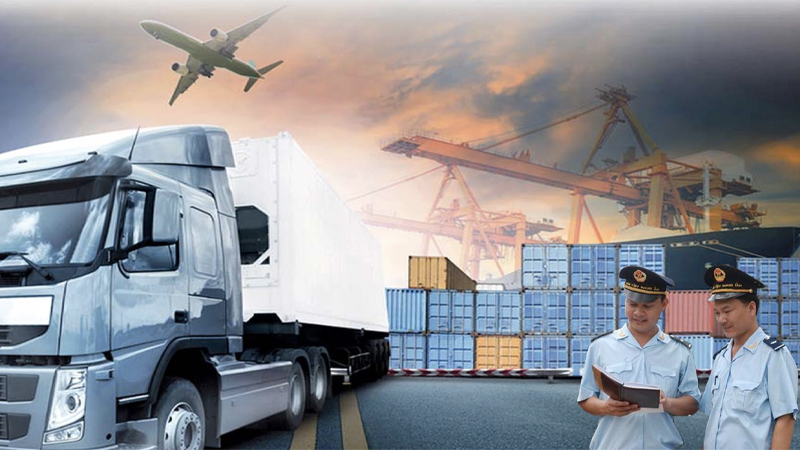
Customs clearance is a mandatory step in the export process, but it is also one of the most challenging stages for many businesses when it comes to customs declarations, document preparation, and handling unexpected issues. In the article below, VinaOpen will guide you through the complete export customs clearance process from A to Z while also highlighting common mistakes during customs clearance.
Documents Required Before Processing Export Customs Procedures
Before carrying out export customs clearance procedures, businesses must prepare a complete set of documents in accordance with regulations for customs declaration and clearance. Depending on the type of goods and export market, the required documents may vary, but they generally include the following:
- Sales Contract: Shows the agreement between the exporter and importer.
- Commercial Invoice: A document showing the value of goods and serving as the basis for customs declaration.
- Packing List: Provides information about the number of packages, weight, and packing specifications.
- Export Customs Declaration: Submitted electronically through the customs system.
- Certificate of Origin (C/O): Applied to shipments eligible for tariff preferences under trade agreements.
- Export License or Specialized Inspection Documents (if applicable): Required for goods under special management.
- Transport Documents: Booking Confirmation or Shipping Instruction.
Export customs documents must maintain consistency in product names, quantities, weights, HS codes, delivery terms, and buyer information. This helps minimize common errors during export customs clearance.
Export Customs Clearance Procedures from A to Z
Once all necessary documents are prepared, businesses can proceed with export customs clearance procedures according to customs authority regulations.
Step 1: Prepare Export Documents
Businesses should carefully review all related documents, including:
- Sales Contract
- Commercial Invoice
- Packing List
- Transport Documents
- Certificate of Origin (C/O) if applicable
- Export License or Specialized Inspection Documents for regulated goods
In particular, all information across documents must remain consistent regarding product names, quantities, weights, HS codes, and related details.
Step 2: Declare the Export Customs Declaration
At this stage, businesses submit shipment information through the electronic customs system. Required information includes business information, importer details, HS code, shipment value, delivery terms, export port, means of transportation, and more.
Any incorrect information may result in customs declaration amendments or additional costs.
Step 3: Submit the Customs Declaration
After completing the declaration, businesses transmit the customs declaration to the VNACCS system for customs authorities to receive and process.
The system automatically checks data, verifies information, and returns customs channel classification results. Businesses should monitor declaration status closely to promptly handle any requests for additional information or adjustments.
Step 4: Customs Channel Classification
After receiving the customs declaration, the customs system classifies shipments to determine the level of inspection required.
Common customs channels include:
- Green Channel
- Yellow Channel
- Red Channel
Depending on the classification result, businesses may need to submit additional documents or may be granted immediate customs clearance.
Step 5: Document and Cargo Inspection
For declarations classified under the Yellow or Red Channel, businesses must cooperate with customs authorities for inspections as required.
Inspection activities may include reviewing declaration documents, checking supporting documents, verifying cargo quantities, product categories, specifications, and actual cargo conditions.
Step 6: Customs Clearance and Payment of Duties and Fees
After all inspection requirements are completed and approved by customs authorities, the customs declaration will be cleared.
At this stage, goods are transferred into the customs supervision area, transportation procedures are finalized, and export activities proceed according to schedule.
Businesses are also required to fulfill export tax obligations (if applicable) and pay related customs fees according to regulations.
Step 7: Customs Declaration Finalization and Cargo Delivery
After goods are loaded onto transportation vehicles and leave the customs supervision area, businesses complete customs declaration finalization procedures according to regulations.
All related documents should also be retained for future customs inspections or reconciliation if needed.
Read more: Export Roadmap for New Businesses: Preparation, Market Selection, and B2B Channels
What Is the Export Customs Clearance Process?
Once goods are declared and accepted by customs authorities, they enter the customs clearance stage before being exported overseas.
In practice, businesses must also coordinate with ports, shipping lines, forwarders, and related parties to ensure goods are exported on schedule.
Procedures at Seaports and Airports
After customs declarations are opened and goods are transported to seaports or airports, the export customs clearance process generally includes the following steps:
- Registering and receiving goods at ports or air cargo warehouses
- Moving goods into customs supervision areas
- Conducting document checks or physical inspections
- Completing customs clearance procedures
- Receiving approval to load goods onto ships or aircraft for export
For sea freight shipments, businesses should pay close attention to container closing time and documentation cut-off time specified by shipping lines.
For air freight shipments, warehouse delivery time is often closer to flight schedules, so businesses should prepare documents early to avoid missing flights.
The Role of Forwarders and Customs Brokers
In export activities, many businesses choose to work with forwarders or customs brokers to optimize transportation and customs clearance processes.
A forwarder is responsible for supporting booking arrangements, domestic transportation, shipment tracking, and handling logistics issues.
Meanwhile, a Customs Broker is a company officially recognized by customs authorities to operate as a customs clearance agent.
Working with forwarders and customs brokers can significantly reduce risks during export customs clearance procedures, especially for new businesses.
Important Timelines Businesses Should Monitor During Customs Clearance
To avoid additional costs and ensure on-time delivery, businesses should closely monitor the following milestones:
- Completion time for export documentation
- Customs declaration opening and submission time
- Container closing time at the port
- Shipping line documentation cut-off time
- Cargo inspection time (if applicable)
- Cargo loading time onto ships or aircraft
- Deadline for sending documents to buyers or banks
Situations That May Cause Customs Clearance Delays
Even with complete documentation, shipments may still face customs clearance delays due to various reasons such as:
- Incorrect or incomplete customs declaration information
- Incorrect HS code declaration
- Missing or inconsistent documents
- Goods requiring specialized inspections that are not yet completed
- Red Channel classification requiring physical cargo inspection
- Suspicious shipments requiring additional verification
- Delayed cargo delivery to ports or failure to meet shipping line cut-off times
Common Mistakes During Export Customs Clearance Procedures
Many shipments experience delays due to errors during document preparation and declaration stages. Below are some common mistakes that can complicate export customs clearance procedures.
Incorrect HS Code
The HS Code is used to classify goods and serves as the basis for customs authorities to determine management policies, tax rates, and specialized inspection requirements.
Incorrect HS codes may force businesses to amend or cancel declarations, explain issues to customs authorities, delay customs clearance, or incur additional warehousing and storage fees.
Incorrect Information on Invoice or Packing List
Commercial Invoice and Packing List are two critical documents in export customs procedures.
If information across these documents is inconsistent, businesses may face customs clearance difficulties.
Common mistakes include incorrect product names, quantities, weights, measurement units, buyer information, or consignee details.
Missing Quarantine Documents or Certificate of Origin (C/O)
For agricultural products, food, seafood, or specialized regulated goods, businesses may need additional documents required by authorities or import markets.
Failure to complete these documents before export may delay customs clearance or prevent businesses from receiving tariff preferences under trade agreements.
Incorrect Cargo Value Declaration
Cargo value is an important piece of information shown on the Invoice and customs declaration.
Incorrect value declarations may trigger additional inspections or explanations.
Common mistakes include incorrect currency declarations, incorrect exchange rates, or omitted related costs.
Customs Declaration Classified Under Red Channel
The Red Channel represents the highest inspection level in customs classification.
When a customs declaration is classified under the Red Channel, businesses must undergo both document inspection and physical cargo inspection before customs clearance approval.
In this situation, businesses should:
- Prepare all required documents
- Arrange personnel to cooperate during inspections
- Ensure cargo is organized conveniently for inspection
- Provide timely explanations if customs authorities request additional information
Export Customs Clearance Checklist
To avoid missing important tasks, businesses should review all documents and procedures before exporting goods. Below is a comprehensive checklist for quick review before customs clearance.
Document Checklist Before Declaration
Before opening customs declarations, businesses should ensure they have prepared:
- Sales Contract
- Commercial Invoice
- Packing List
- Shipping booking or transportation schedule
- Buyer and consignee information
- HS code of goods
- Export License (if applicable)
- Quarantine or specialized inspection documents (if applicable)
- Certificate of Origin (C/O) for tariff preferences
Read more: What Documents Are Included in Export Documentation? Complete Guide from A to Z
Export Document Verification Checklist
Before submitting customs declarations, businesses should compare information across documents, including:
- Consistent product names across all documents
- Accurate quantities and measurement units
- Matching cargo weight with Packing List
- Matching cargo value with Invoice
- Accurate buyer and seller information
- Clearly stated Incoterms
- Correct departure and destination ports matching transportation bookings
- Complete signatures and stamps if required
Customs Clearance and Cargo Delivery Checklist
After customs declarations are accepted, businesses should continue monitoring:
- Customs channel classification results
- Preparation of documents if classified under Yellow or Red Channel
- Personnel arrangements for cargo inspections if required
- Timely movement of goods into customs supervision areas
- Container closing time and documentation cut-off time
- Customs clearance status confirmation on the system
- Completion of delivery procedures with transportation providers
Notes for New Export Businesses
For businesses new to exporting, understanding export customs clearance procedures is necessary but not sufficient for building sustainable export operations.
In reality, many new businesses struggle not only with customs procedures but also with finding buyers, standardizing company profiles, and meeting import market requirements.
Therefore, in addition to proactively learning about customs regulations and export documentation, businesses should consider working with reputable consulting firms, logistics providers, or B2B trade platforms during the initial stages. This helps minimize risks, reduce learning time, and improve opportunities to access international customers.
VinaOpen is one of the platforms supporting Vietnamese suppliers in connecting with international buyers and expanding export market opportunities.
Through VinaOpen, businesses can standardize Supplier Profiles, improve Export Readiness capabilities, strengthen B2B presence, promote products, access market and industry standard information, and find trading opportunities that match their capabilities.
In summary, understanding export customs clearance procedures is an important condition for businesses to export goods in compliance with regulations, minimize risks, and ensure on-time delivery to international partners.
At the same time, businesses should actively build export knowledge, understand market standards, and search for suitable buyer connection channels.
Contact VinaOpen to start standardizing your Supplier Profile, connect with international buyers, and confidently bring Vietnamese products to global markets.