

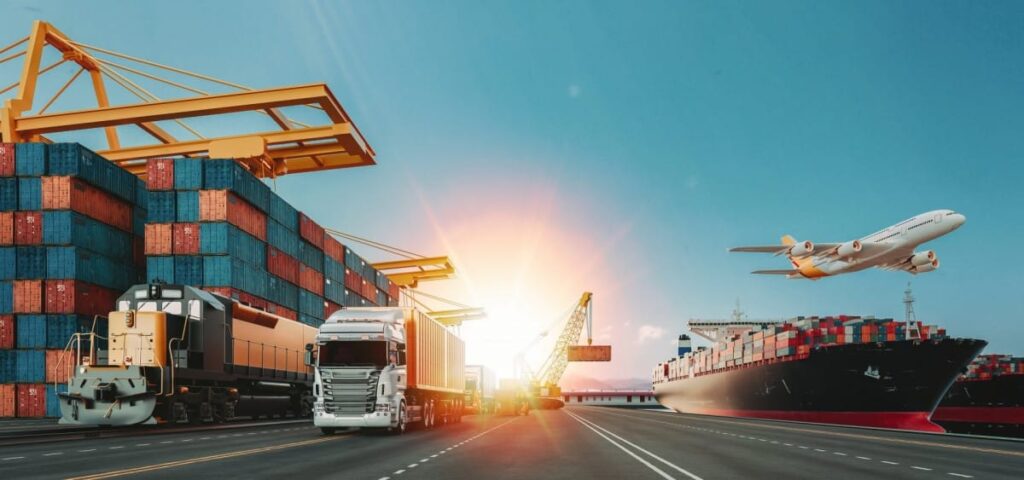
The B2B export market is creating significant opportunities for Vietnamese businesses to connect with international buyers and expand their export activities. However, beyond product quality, companies must also demonstrate a professional supplier image to compete effectively in global trade. In this article, VinaOpen will help you better understand the characteristics of the B2B export market, how to approach international customers, and how to strengthen supplier credibility in international trade.
Overview of the B2B Export Market
The B2B export market refers to business activities where companies sell goods, raw materials, or finished products to international trading companies, manufacturers, distributors, wholesalers, or other businesses instead of selling directly to end consumers.
B2B export transactions often involve large order values and strict quality requirements. Therefore, businesses participating in B2B exports must prepare both their products and their professional supplier image systematically.
As global trade continues to expand, the B2B export market has become an important growth direction for many Vietnamese enterprises by helping them:
- Expand sales markets and increase revenue
- Improve brand value
- Reduce dependence on domestic markets
- Build long-term relationships with international customers
- Upgrade production standards and improve management capacity
- Access global technologies and market trends
- Integrate deeper into global supply chains and establish long-term cooperation opportunities
Vietnam has strong potential in several industries within the B2B export market thanks to its manufacturing capabilities and supply advantages, including:
Agricultural Products and Food
Products such as coffee, cashew nuts, rice, black pepper, tropical fruits, and processed food.
Seafood
High-potential products include shrimp, pangasius, tuna, frozen seafood, and processed seafood products.
Handicrafts and Furniture
Products such as bamboo and rattan goods, ceramics, wooden furniture, home décor, and handmade products.
Textile, Garment, and OEM Manufacturing
Including bags, garments, fashion accessories, OEM production, and ODM manufacturing services.
Packaging, Plastics, and Supporting Industrial Products
Vietnamese businesses also have strong opportunities in packaging, plastic products, industrial components, and manufacturing materials.
Key Export Markets for Vietnamese Businesses
In B2B export activities, selecting the right export market is essential to optimize buyer acquisition costs and develop suitable product strategies. Each market has unique characteristics related to consumer demand, quality standards, import regulations, and competition levels.
Businesses that understand these market characteristics can build B2B export strategies aligned with their manufacturing capabilities and long-term growth goals.
Currently, major B2B export markets for Vietnamese enterprises include:
- United States
- European Union
- Japan
- South Korea
- China
- Middle East
- ASEAN countries
These regions offer strong opportunities in sectors such as agriculture, food, seafood, textiles, packaging, and supporting industries.
United States Market
The U.S. has strong import demand but requires high compliance standards. Suitable industries include agriculture, seafood, processed food, and furniture.
European Union Market
The EU prioritizes product quality, sustainable production, and supply chain transparency. Businesses must establish strong compliance systems and international certifications from the beginning.
Japan Market
Japanese buyers highly value reliability, stable product quality, and carefully evaluate suppliers before cooperation.
South Korea Market
South Korea is growing rapidly and offers many OEM opportunities in food, cosmetics, packaging, textiles, manufacturing, and industrial components.
China Market
China is a large and dynamic market but frequently updates import regulations and tightens product origin requirements.
ASEAN and Middle East Markets
These markets are promising B2B export destinations for Vietnamese companies because of increasing import demand, flexible compliance requirements, and easier market access for newer exporters.
How to Find Buyers, Verify Buyers, and Handle RFQs in the B2B Export Market
Finding buyers in the B2B export market is essential for expanding business opportunities and ensuring sustainable export growth. However, many businesses still struggle with buyer sourcing, partner verification, and building long-term B2B relationships.
How to Find Buyers in the B2B Export Market
To find buyers in the B2B export market, businesses should combine multiple channels such as international B2B platforms, customs databases, social media, and trade exhibitions.
Some effective methods include:
Find Buyers Through International B2B Platforms
These platforms allow businesses to showcase products, build supplier profiles, and connect with international buyers.
Popular B2B platforms include:
- Alibaba
- Global Sources
- Tradekey
- EC21
- VinaOpen (supporting businesses in standardizing export profiles and connecting with international buyers)
Find Buyers Through International Trade Fairs and Exhibitions
This is an effective channel for many industries because businesses can directly meet buyers, introduce products, and better understand market demand.
Find Buyers Through Digital Marketing and Export Websites
Through Google Search, corporate websites, social media, and LinkedIn, many buyers can identify reliable suppliers in specific industries.
Therefore, businesses entering the B2B export market should invest in these channels to improve visibility and buyer access.
How to Verify Buyers Before Transactions
One of the major risks in the B2B export market is delayed payments, trade fraud, and unreliable business partnerships. Therefore, before signing contracts or processing large export orders, suppliers should carefully verify buyer information to reduce potential risks.
Key Information to Check When Verifying a Buyer
Before entering into a transaction, suppliers should review the following details:
- Company website
- Business registration information
- Company email domain
- Office address
- Tax identification or business registration number
- LinkedIn company profile
- Transaction history
- Market reputation and industry reviews
In addition, suppliers can further assess a buyer’s financial capacity and credibility by reviewing:
- Trade credit reports
- Payment history
- International blacklist databases
- Information from trade associations or industry networks
A thorough verification process helps businesses avoid payment risks and build safer long-term partnerships.
How to Handle RFQs Professionally
RFQ (Request for Quotation) is a quotation request sent by buyers to suppliers for comparing pricing, evaluating capabilities, and identifying suitable business partners.
Many businesses lose export opportunities because they respond slowly to RFQs or fail to provide sufficient technical and product information.
To improve the chances of connecting with buyers, RFQ responses should include the following key information:
- Product information
- Technical specifications
- MOQ (Minimum Order Quantity)
- FOB/CIF pricing
- Production lead time
- Payment terms
- Product images
- Relevant certifications
When sending quotations, businesses should respond clearly and directly while attaching professional product catalogs to demonstrate manufacturing capabilities and compliance standards.
Fast response time is also a major advantage in increasing cooperation opportunities with buyers in the B2B export market.
Comparison of Popular B2B Channels in the Export Industry
Today, B2B platforms have become essential channels for businesses to find buyers, promote products, and build a professional supplier image in the B2B export market. However, each platform has different buyer segments, business models, and approaches.
The comparison below helps businesses better understand several common B2B export platforms.
| Criteria | Alibaba | Global Sources | VinaOpen |
|---|---|---|---|
| Platform Model | Global B2B e-commerce marketplace | International sourcing and buyer connection platform | Platform supporting Vietnamese suppliers to connect with international buyers |
| Main Buyer Segments | Global buyers across multiple industries | Large buyers, importers, sourcing companies | Buyers looking for Vietnamese suppliers and export businesses |
| Key Industries | Multi-industry, OEM, manufacturing, consumer goods | Electronics, OEM, industrial sourcing | Agriculture, food, seafood, OEM, Vietnamese suppliers |
| Competition Level | Very high | High | Focused on Vietnamese supplier ecosystem |
| Participation Cost | Relatively high membership fees | High cost, suitable for larger enterprises | Designed to support Vietnamese businesses in building export profiles |
| Buyer Acquisition Method | RFQ, product ranking, advertising | Sourcing fairs, buyer lists | Supplier connections, export content, business profiles |
| Supplier Requirements | Professional profile and international certifications | Strong compliance and manufacturing capabilities | Support in standardizing export supplier profiles |
| Suitable For | Businesses with international marketing budgets | Large factories, OEM suppliers, strong compliance-based suppliers | Vietnamese businesses building structured export capacity |
| Key Advantage | Large buyer volume, many RFQs | High-quality buyers, strong sourcing focus | Focused on Vietnamese supplier ecosystem and export readiness |
| Main Limitation | High competition and price pressure | High costs and strict requirements | Ecosystem and buyer community still expanding |
Each platform serves different business needs. Companies should choose the most suitable channel based on industry, export readiness, budget, and long-term strategy.
Building a Supplier Profile to Increase Trust with International Buyers
In the B2B export market, international buyers evaluate not only products but also the professionalism, reliability, and transparency of suppliers before deciding to cooperate.
Businesses with a clear, professional, and transparent Supplier Profile often have stronger opportunities to approach buyers and build long-term trust.
What Is a Supplier Profile and Why Is It Important?
A Supplier Profile can be understood as a business capability portfolio prepared for international partners and buyers.
This profile usually presents an overview of:
- Company background
- Manufacturing capabilities
- Product categories
- Factory facilities
- Certifications
- Export experience
- OEM/ODM capabilities
- Quality management systems
In B2B export activities, the Supplier Profile acts like the “business face” of a company when dealing with international buyers.
Before sending RFQs or placing large orders, many buyers review supplier profiles to assess trust, operational strength, and production capability.
How to Optimize a Supplier Profile to Increase Trust
A professionally built Supplier Profile can significantly improve credibility when approaching international buyers.
Key optimization strategies include:
Clearly Present Business Capabilities
Show company history, manufacturing strength, factory size, workforce, production capacity, and export markets.
Highlight International Compliance Certifications
Display quality standards, product certifications, and production compliance systems to increase trust and transparency.
Use Professional Factory and Product Images
Include real photos of factories, production lines, warehouses, packaging systems, and actual products to improve authenticity.
Optimize Product Information and OEM/ODM Capabilities
Clearly explain product categories, technical specifications, packaging formats, custom production capabilities, and MOQ requirements.
Keep Supplier Profiles Consistent Across Platforms
Ensure business information is aligned across websites, B2B platforms, catalogs, and buyer-facing channels.
Register as a Supplier on VinaOpen – Expand Access to International Markets
As the B2B export market becomes increasingly competitive, having a good product alone is no longer enough for businesses to approach international buyers. Companies must also focus on building a professional presence across export-oriented platforms to expand partnership opportunities and strengthen market visibility.
VinaOpen was developed with the vision of becoming a platform that supports Vietnamese suppliers in connecting with global buyers while improving export readiness.
Through VinaOpen, businesses have opportunities to:
- Introduce products to international buyers
- Build a professional Supplier Profile
- Increase visibility in the B2B export market
- Improve opportunities to receive RFQs from international customers
VinaOpen helps businesses present their manufacturing capabilities more clearly, including international certifications, quality management systems, OEM capacity, and export compliance standards.
The platform is designed to support multiple industries with strong B2B export potential, including agriculture, food, seafood, OEM manufacturing, packaging, and supporting industries.
Beyond supplier connections, VinaOpen is also building a specialized export knowledge ecosystem that helps Vietnamese businesses gradually improve export readiness, strengthen operational capacity, and develop sustainable export activities.
Strengthening Export Readiness for Long-Term Growth
Success in the B2B export market requires more than finding buyers. Businesses must also improve internal systems, operational transparency, and international compliance standards.
Key areas that support stronger export readiness include:
Compliance and Certification Preparation
International buyers increasingly prioritize suppliers that can demonstrate strong compliance systems, certifications, and quality control procedures.
Professional Communication and RFQ Handling
Fast, accurate, and professional communication helps suppliers build stronger trust with global buyers.
Transparent Supply Chain Management
Traceability, sourcing transparency, and production accountability are becoming critical requirements in international trade.
Digital Presence and Supplier Branding
A consistent business image across websites, B2B platforms, catalogs, and digital channels significantly increases credibility.
Long-Term Relationship Building
Successful B2B export growth often depends on building trust-based relationships with buyers rather than focusing only on one-time transactions.
Conclusion
The B2B export market is creating major opportunities for Vietnamese businesses to connect with international buyers and expand their global trade activities.
However, to compete effectively, companies need more than high-quality products. They must also invest in professional Supplier Profiles, international compliance, efficient RFQ handling, and long-term trust-building with buyers.
With proper preparation, businesses can improve export readiness, strengthen their supplier image, and gradually establish themselves as reliable partners in the global market.
Register today to become a Supplier on VinaOpen and expand opportunities to connect with international partners while building a trusted supplier position in the global B2B export ecosystem.