


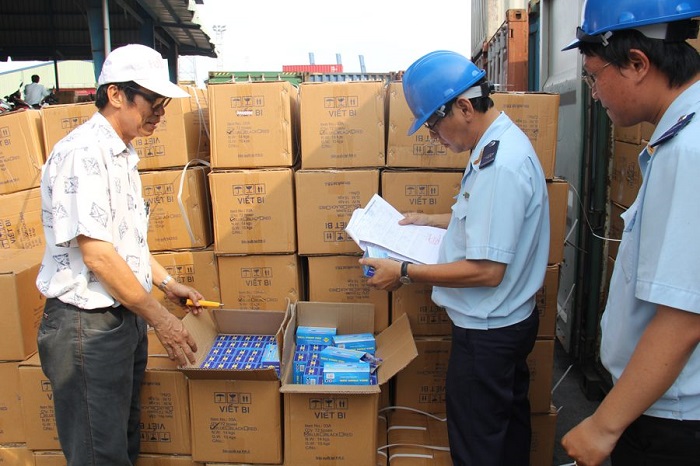
Preparing complete and accurate export documentation helps businesses clear customs smoothly, minimize risks, and better meet the requirements of international partners. However, many new businesses still face difficulties in determining which documents are required, when quarantine certificates, Certificates of Origin (C/O), or other specialized certifications are needed.
In this article, Vina Open will help businesses better understand what an export documentation set includes, the function of each type of document, and important notes to ensure a more efficient export process.
What Is Export Documentation? Why Is It Important?
In international trade, export documentation is one of the key factors determining whether customs clearance, transportation, and payment processes run smoothly.
Export documentation is a collection of documents and papers related to exporting goods overseas. This document set is used for:
- Carrying out customs procedures
- Proving the legality of goods
- Supporting international transportation
- Facilitating international payments
- Meeting import country requirements
Preparing complete export documentation not only helps businesses complete customs procedures but also ensures the entire export process is fast, transparent, and compliant with regulations. Below are the main reasons why businesses should pay close attention to export documentation:
- Helps goods clear customs smoothly
- Meets import market requirements
- Supports international payment processing
- Enhances professionalism and credibility with partners
- Facilitates inspections, audits, and tax settlements
What Does an Export Documentation Set Include?
In export activities, the document package usually consists of many different types of paperwork. Depending on the type of goods, import market, and trading method, businesses may need additional specialized documents. However, in general, export documentation is commonly divided into the following four groups:
Basic Commercial Documents
Used to present transaction information between the exporter and importer.
Transportation and Delivery Documents
Used for international cargo transportation and confirmation of goods handover between related parties.
Customs Documents
Used for customs declaration and customs clearance procedures.
Quality and Origin Certificates
Help businesses meet import requirements and obtain trade preferences when necessary.
Requirements for Invoice, Packing List, B/L, Booking, SI, and Transport Documents
This group of commercial and transportation documents plays a particularly important role because it directly affects:
- Customs procedures
- International transportation
- Payment processing
- Cargo delivery and receipt
Mandatory Contents of a Commercial Invoice
A Commercial Invoice is an important document showing the transaction value between the exporter and importer. It is also used by customs authorities to determine cargo value, by banks for international payment processing, and by business partners for debt reconciliation and transaction records.
A standard commercial invoice should normally include the following information:
- Exporter information
- Importer information
- Invoice number and issue date
- Product name
- Product description
- HS Code (if required)
- Quantity
- Unit price and total value
- Delivery terms (Incoterms)
- Payment terms
- Payment currency
- Port of loading and port of discharge
- Signature and company stamp
For L/C payments, the commercial invoice must strictly comply with bank requirements and letter of credit terms.
What Is the Purpose of a Packing List?
A Packing List is a document used to describe the packing details and packaging specifications of export shipments. The more detailed the packing list, the easier the inspection and cargo handling process becomes.
This document supports:
- Customs cargo inspection
- Shipping line/airline transportation arrangements
- Buyers in counting goods upon receipt
- Warehousing and logistics operations
A packing list usually includes:
- Sender and receiver information
- Related invoice number
- Product name
- Number of packages
- Packing specifications
- Net Weight
- Gross Weight
- Package dimensions
- Shipping Marks
The Role and Types of Bill of Lading (B/L)
A Bill of Lading (B/L) is a sea transport document issued by the shipping line or carrier after goods are loaded onto the vessel. It is one of the most important export documents because it serves three key functions:
- Confirms the carrier has received the goods for transportation
- Acts as evidence of the transport contract
- Serves as a document of title to the goods
In practice, there are several types of B/L depending on the purpose of use:
Original Bill of Lading
An original transport document with ownership value. The consignee must present the original B/L to receive the goods.
Seaway Bill
An electronic or non-negotiable bill that does not require presentation of the original document for cargo release, helping shorten delivery time.
Telex Release B/L
Allows cargo release without sending physical original documents, suitable for urgent shipments or trusted business relationships.
Master Bill and House Bill
These commonly appear when businesses work through logistics intermediaries or freight forwarders.
Booking and SI in Exporting
During international shipping preparation, businesses usually work with shipping lines or freight forwarders through two important steps: Booking and SI.
Booking
Booking refers to reserving cargo space with a shipping line or airline before shipment.
Booking information usually includes:
- Product name
- Number of containers
- Container type
- Port of loading and destination port
- Vessel schedule
- Cargo cut-off date
After confirmation, the business receives a Booking Confirmation to prepare cargo delivery to the port.
SI (Shipping Instruction)
SI is the shipping instruction provided by the shipper to the carrier or forwarder for issuing the Bill of Lading.
The information in the SI must be absolutely accurate because it serves as the basis for issuing the official B/L.
An SI typically includes:
- Shipper and consignee information
- Notify party
- Cargo description
- Number of packages
- Container/seal number
- Freight terms
- B/L issuance instructions
Important Notes for Transport Documents
Transportation documents are closely linked to the entire export document set. Therefore, businesses should pay attention to the following:
- Ensure consistency of information
- Carefully check documents before B/L issuance
- Pay attention to cut-off times
- Proactively coordinate with forwarders and shipping lines
C/O, COA, CQ, Health Certificate, and Quality Certifications in Export Documentation
In international export activities, besides basic commercial and customs documents, many markets also require businesses to provide certificates related to origin, quality, and product safety.
Certificate of Origin (C/O)
A Certificate of Origin (C/O) is a document certifying that goods are manufactured or originate from a specific country.
In exporting, C/O plays an important role in:
- Enjoying tariff preferences under Free Trade Agreements (FTAs)
- Proving the origin of goods
- Meeting import country requirements
- Increasing transparency in international trade
A typical C/O application dossier includes:
- Invoice
- Packing List
- Customs declaration
- Bill of Lading
- Raw material invoices (if required)
- Manufacturing process or proof of origin documents
COA and CQ Certificates in Export Documentation
COA and CQ are common certificates used to confirm product quality and standards in export activities. Although often mentioned together, they serve different purposes.
COA (Certificate of Analysis)
A certificate showing product composition or testing results, including:
- Product composition
- Physical and chemical indicators
- Moisture content
- Active ingredient concentration
- Microbiological testing results
- Relevant technical standards
CQ (Certificate of Quality)
A quality certificate confirming that products meet declared technical or quality standards.
CQ usually includes:
- Product information
- Applicable standards
- Quality assessment results
- Factory quality approval confirmation
When Is a Health Certificate Required?
A Health Certificate is a sanitary or food safety certificate issued by a competent authority, confirming that goods meet hygiene and safety requirements for export.
This document is particularly important for:
- Processed foods
- Agricultural products
- Seafood
- Beverages
- Animal- and plant-based products
Many international markets require a Health Certificate as a mandatory import condition.
Information commonly shown on a Health Certificate includes:
- Product name
- Product origin
- Manufacturer
- Safety inspection results
- Confirmation of export eligibility
Foreign Trade Contracts, Export Entrustment, and Essential Terms
In export activities, the foreign trade contract is an important legal foundation that establishes the rights and obligations of parties involved in international transactions.
Legal Role of a Foreign Trade Contract
A Sales Contract is an agreement between a seller and buyer in different countries regarding international goods trading.
In practice, most export documents are prepared based on the contents of the foreign trade contract.
The contract has important legal value because it:
- Defines rights and responsibilities of the parties
- Serves as the basis for delivery and payment
- Supports settlement of trade disputes
- Provides the basis for customs and banking documents
When Is Export Entrustment Needed?
Export entrustment refers to a business authorizing another company to conduct export procedures on its behalf.
This method is suitable when:
- The business does not yet have export functions
- The business lacks export experience
- The business wants to optimize costs and personnel
- Exporting short-term orders
Important Clauses in an Export Contract
A complete and well-structured foreign trade contract should clearly define important terms to minimize disputes and protect both parties’ interests.
Key clauses include:
- Parties’ information
- Product description
- Quantity and unit price
- Delivery terms (Incoterms)
- Payment method
- Documentation terms
- Claims and dispute resolution terms
Businesses should also specify:
- Complaint period
- Dispute handling mechanism
- Applicable law
- Arbitration or court jurisdiction
These clauses are essential for protecting rights in international disputes.
A well-prepared foreign trade contract not only helps businesses control risks but also builds a professional foundation for sustainable international market expansion.
Export Invoices, Accounting, and Document Retention
In export activities, besides preparing documents for customs clearance and delivery, businesses also need to carefully manage invoices, accounting records, and post-export document storage.
Important Regulations for Export Invoices
Export invoices are documents showing the transaction value of exported goods and serve as the basis for tax declarations, accounting, and international payments.
Currently, Vietnamese exporters commonly use:
- Commercial Invoice
- Electronic invoices in accordance with current tax regulations
When issuing export invoices, businesses should note:
- Invoice information must be accurate and consistent
- Product descriptions should be clear
- Pay attention to export VAT rates
- Issue invoices at the correct time
What Does Export Accounting Documentation Include?
In export activities, accounting documents are not only used for revenue recognition but also serve as important evidence for:
- Tax finalization
- Tax refunds
- Audits
- International debt reconciliation
An export accounting file usually includes:
- Foreign trade contract
- Commercial Invoice
- Packing List
- Export customs declaration
- Bill of Lading/AWB
- International payment documents
- Warehouse release slips
- Electronic invoices
- Quarantine certificates or C/O (if applicable)
- Goods delivery records
- Related tax refund documents
Export Document Retention
After completing an export transaction, businesses are still required to retain all related documents according to regulations.
Documents to be stored include:
- Foreign trade contracts
- Invoices
- Packing Lists
- Bills of Lading
- Customs declarations
- Payment documents
- Certificates of Origin
- Quarantine certificates
Downloadable Checklist/Templates for Suppliers
For businesses new to exporting, lacking a standardized checklist and templates often leads to incomplete preparation and information errors. Therefore, businesses should create their own export document checklist to better control documentation before customs clearance.
Below are the basic checklist groups suppliers should prepare during export operations.
Basic Export Documentation Checklist for New Businesses
- Company legal documents
- Product documents
- Customer and transaction documents
- Export documents
Required Export Documentation Checklist
| Document Group | Required Documents |
|---|---|
| Commercial Documents | Foreign trade contract, Commercial Invoice, Packing List |
| Transportation Documents | Booking, SI, Bill of Lading/AWB |
| Customs Documents | Customs declaration, export license (if applicable) |
| Quality Certifications | C/O, COA, CQ, Health Certificate |
| Accounting Documents | Electronic invoices, bank payment documents |
| Logistics Documents | Delivery notes, domestic transport documents |
Sample Invoice, Packing List, and Foreign Trade Contract Templates
Some templates businesses should prepare include:
- Commercial Invoice template
- Packing List template
- Foreign trade contract template
- Shipping Instruction (SI) template
- Export documentation checklist template
When using templates, businesses should:
- Adjust according to each market and product sector
- Ensure consistency across all documents
- Update according to the latest customs and tax regulations
Preparing complete and accurate export documentation is a critical factor in helping businesses clear customs smoothly, minimize risks, and meet international partner requirements. From invoices, packing lists, and Bills of Lading to C/Os, quality certificates, and quarantine documents, each document plays an important role in the export process.
Especially in the agricultural and food industries, establishing a systematic document management process helps businesses enhance professionalism, optimize operations, and build a solid foundation for sustainable international market expansion.