

Agricultural exports create significant opportunities for Vietnamese businesses to access international markets and enhance product value. However, to bring agricultural products into major global markets, enterprises must meet various regulatory and market-specific requirements. In this article, VinaOpen explores the key procedures, standards, and regulations involved in agricultural exports to help businesses standardize products, improve company documentation, and gradually strengthen their ability to compete globally.
Vietnam’s Agricultural Products Have Strong Export Potential
Vietnam is widely recognized for its strong advantages in agricultural production and exports, thanks to its tropical climate, abundant raw materials, and long-standing farming experience. Over the years, agriculture has remained one of the most important sectors in Vietnam’s export structure, consistently recording positive growth across many international markets.
According to data from statistical agencies and the Ministry of Industry and Trade, Vietnam’s agricultural export sector has continued to show strong growth in recent years. Key products such as coffee, fruits and vegetables, cashew nuts, pepper, and seafood have achieved high export value due to recovering global demand and advantages created by free trade agreements.
However, alongside this growth potential come increasingly strict import market requirements related to quarantine, food safety, traceability, and origin certification. This requires Vietnamese businesses to invest systematically in raw material regions, quality management systems, production processes, and export capability documentation to improve competitiveness.
Procedures and Documentation for Exporting Agricultural Products and Food
To bring agricultural products and food into international markets, businesses must not only ensure product quality but also prepare complete documentation and follow export procedures in compliance with regulations.
HS Codes and Export Taxes for Agricultural and Food Products
HS Code (Harmonized System Code) is a product classification code used in international import-export activities. It serves as the basis for determining export taxes, applying management policies, customs declarations, and assessing export conditions.
Agricultural and food products are assigned different HS Codes depending on product category, composition, level of processing, and packaging specifications. To check the HS Code of a specific agricultural product, businesses can access the website of Vietnam Customs. Most agricultural export products are generally categorized under Section II – Food Products.
To determine the applicable tax rate for agricultural exports, businesses need to identify the correct HS Code of the product. Most export goods are eligible for a 0% VAT rate if they meet all required conditions regarding documentation, payment records, and tax declarations in accordance with current tax regulations. This reflects Vietnam’s policies aimed at promoting exports.
What Documents Are Required for Exporting Agricultural Products and Food?
The export documentation set for agricultural products and food may vary depending on the product type, import market, and buyer requirements. In general, a customs documentation set may include:
- Commercial Invoice
- Packing List
- Original Bill of Lading
- Certificate of Origin (C/O)
- Export License
- Fumigation Certificate
- Phytosanitary Certificate
- Certificate of Free Sale
- Health Certificate for food products
- Quantity and Quality Certificate
- Radiation Certificate
- Quality Inspection Report
In particular, when exporting agricultural products, businesses must ensure complete documentation such as sales contracts, commercial invoices, packing lists, bills of lading, and certificates of origin. Additional documents may vary depending on the destination market.
Export Procedures for Agricultural Products and Food
The export process for agricultural products and food involves multiple steps, including cargo preparation, quarantine, customs declaration, and international transportation. Below is a standard export procedure commonly applied to agricultural and food exports:
Step 1: Check Product Export Eligibility
Determine whether the product is permitted for import into the target market and identify the required standards and regulatory conditions.
Step 2: Prepare Goods and Export Packaging
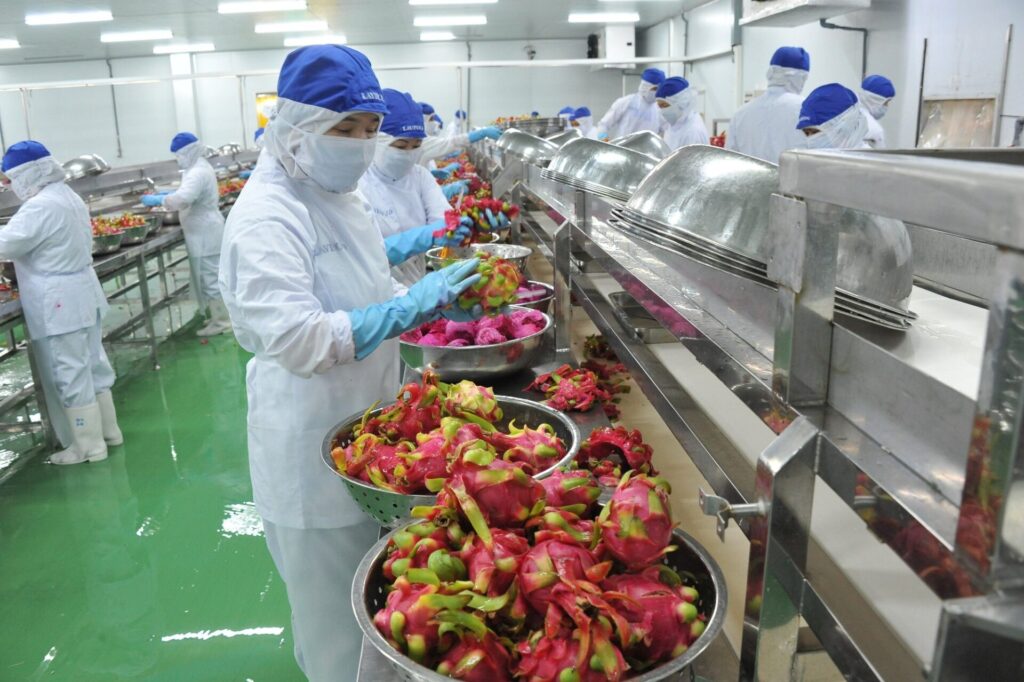
Businesses collect products, classify them, perform preliminary processing, and package them according to the standards of the importing market.
Step 3: Prepare Export Documentation
Ensure all required certificates, compliance documents, and inspection records are complete.
Step 4: Submit Export Customs Declaration
Businesses submit electronic customs declarations, declare HS Codes, and provide export documentation. After review, customs authorities classify shipments according to export inspection channels.
Step 5: Conduct Quarantine and Specialized Inspection
Depending on the product type, agricultural exports may require quarantine or specialized inspection. Customs authorities then issue necessary approvals to complete export procedures.
Step 6: Customs Clearance and International Transportation
Once cleared, goods are transported internationally, and shipping documents such as bills of lading are issued. Businesses must closely monitor delivery schedules to meet buyer expectations.
Step 7: Finalize Documentation and International Payment
After shipment, businesses send the complete document set to the buyer or bank, proceed with international payment, and archive export records.
Key Agricultural Export Products of Vietnam
Vietnam is currently one of the world’s leading agricultural exporting countries, with many products having established strong positions in international markets. Several key agricultural products contribute significantly to the country’s export turnover, including:
Coffee
Vietnamese coffee is exported to major markets such as the EU, the United States, Japan, and South Korea. As one of the world’s largest coffee exporters, Vietnam plays an important role in the global coffee supply chain.
Rice
Rice remains one of Vietnam’s most strategic agricultural exports. Major importing markets include the Philippines, Indonesia, China, Africa, and the EU.
Vegetables and Fruits
Popular exported products include durian, dragon fruit, bananas, mangoes, jackfruit, watermelon, passion fruit, and other tropical produce.
Cashew Nuts
Vietnam has maintained its position as one of the world’s leading exporters of processed cashew nuts for many consecutive years. Main consumer markets include the United States, the EU, China, and the Middle East.
Black Pepper
Vietnamese pepper accounts for a significant share of global pepper trade. Key export destinations include the United States, the EU, India, and the Middle East.
Cassava and Cassava-Based Products
Cassava and cassava starch are agricultural export products with strong demand in many Asian markets, especially China.
Processed Agricultural Products
This category includes dried fruits, fruit juices, packaged foods, frozen agricultural products, and processed spices.
Export Regulations for Agricultural and Food Products by Market
Each importing market has its own regulatory system and quality standards for agricultural and food products.
EU Market Regulations
The EU is considered one of the strictest markets for agricultural and food imports. Businesses exporting to the EU must comply with requirements related to quality, origin, and food safety.
EVFTA Requirements
Agricultural exports must comply with rules of origin, hold valid certificates of origin, and meet EU technical and food safety standards.
MRL Regulations
MRL (Maximum Residue Limits) regulations define the maximum allowable levels of pesticide residues and chemical substances in food products.
GlobalG.A.P Standards
This certification covers food safety, production process control, environmental protection, and sustainable agricultural practices.
Traceability Requirements
EU markets require businesses to provide full traceability across the production, packaging, and supply chain before import approval.
U.S. Market Regulations
The United States is one of the world’s largest importers of agricultural and food products, but it also maintains a highly strict food safety regulatory system.
FDA Requirements
Agricultural export products must be registered with the FDA, manufacturing facilities must be declared, labeling regulations must be followed, and food safety requirements must be met.
USDA Standards
Depending on product categories, exporters may need to comply with USDA requirements related to agricultural inspection, quality standards, or organic certification.
APHIS Compliance
Some agricultural products must meet plant quarantine regulations and import protocols established by APHIS (Animal and Plant Health Inspection Service).
FSMA (Food Safety Modernization Act)
Businesses exporting to the U.S. must comply with FSMA regulations, including FDA facility registration, food safety planning, and preventive control programs.
FSVP (Foreign Supplier Verification Program)
Exporters may need to provide product testing reports, food safety management certifications, and manufacturing process documentation.
Japan and China Market Regulations
Agricultural exports to Japan and China must meet specific requirements depending on product categories.
MHLW Requirements (Japan)
Japan applies strict control standards related to pesticide residues, food additives, microbiological limits, heavy metals, and prohibited substances.
JAS Standards (Japan)
JAS standards evaluate product quality, manufacturing processes, labeling, and traceability systems.
China Decree 248
This regulation requires food exporters to register with the General Administration of Customs of China (GACC) and obtain exporter registration approval.
China Decree 249
Imported food products entering China must meet traceability requirements, manufacturer control standards, growing area codes, packing facility registration, and phytosanitary documentation requirements.